 Join us for the Ramsay/Massey breakfast at Massey College with Suzanne Simard, whose groundbreaking research has reshaped how we understand forests and the intricate relationships that sustain them.
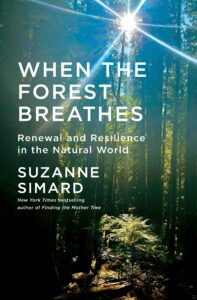
In her new book, When the Forest Breathes: Renewal and Resilience in the Natural World, Simard explores the hidden networks that connect trees, fungi, and soil into a living, communicating community. Drawing on decades of scientific discovery, she reveals how cooperation, interdependence, and renewal are central to the resilience of the natural world.
Simard will introduce the book and then sit down for a conversation with Dr. James Orbinski, Principal of Massey College.
Space is limited to 90 guests. Tickets include breakfast and a signed hardcover copy of When the Forest Breathes: Renewal and Resilience in the Natural World.
Program:
8:30 a.m. – 9:00 a.m. Breakfast in the Upper Library
9:00 a.m. – 10:00 a.m. Suzanne Simard in Conversation with Dr. James Orbinski
Presented in partnership with:

Speakers
-
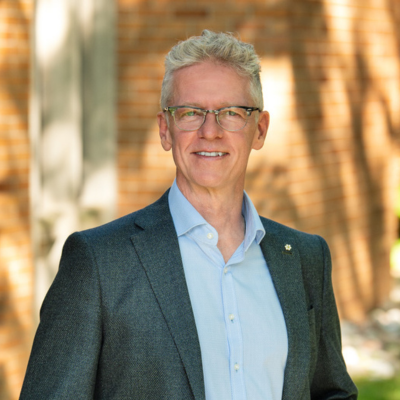
 James OrbinskiPrincipal, Massey College
Dr. James Orbinski is Principal of Massey College at the University of Toronto. To this role, Dr. Orbinski brings a lifelong commitment to learning, leadership, and civility for the public good. As a medical doctor, humanitarian practitioner and advocate, author, and global health scholar, James Orbinski believes in actively engaging and shaping our world so that it is more just, fair, and humane.
Providing medical humanitarian relief worldwide in situations of war, famine, epidemic disease and genocide with Médecins Sans Frontières (Doctors Without Borders), Dr. Orbinski also served as MSF’s International Council president and accepted the 1999 Nobel Peace Prize on behalf of Médecins Sans Frontières. He is the founding director of York University’s Dahdaleh Institute for Global Health Research, co-founder of Dignitas International, and co-chair of the founding and startup of the Drugs for Neglected Diseases initiative (DNDi).
Renowned for his ground-breaking research on medical humanitarianism, infectious diseases, global health governance, and the health impacts of climate change, Dr. Orbinski’s work is documented in his bestselling book, An Imperfect Offering: Humanitarianism in the 21st Century, as well as the award-winning documentary film Triage: the Humanitarian Dilemma of Dr. James Orbinski.
James Orbinski holds an MD degree from McMaster University, and an MA in International Relations from the University of Toronto. He is an Officer of the Order of Canada, awarded for a lifetime of leadership in global health and humanitarianism, and received Canada’s Meritorious Service Cross for his leadership in providing direct medical relief in Kigali during the 1994 Genocide Against the Tutsi in Rwanda.
James and his wife Rolie lived at Massey College when James held the inaugural Saul Rose Fellowship at Massey College. In the twenty years since, James has served the Massey community as a Senior Fellow and on the Board of Governors. As well as serving as Principal of Massey College, Dr. Orbinski is a full Professor at the University of Toronto’s Termerty Faculty of Medicine and the Munk School for Public Policy.
-
Suzanne SimardAuthor
Suzanne Simard is a Professor of Forest Ecology at the University of British Columbia and the author of the book, Finding the Mother Tree.
She is a pioneer on the frontier of plant communication and intelligence; and has been hailed as a scientist who conveys complex, technical ideas in a way that is dazzling and profound. Her work has influenced filmmakers (the Tree of Souls in James Cameron’s Avatar) and her TED talks have been viewed by more than 10 million people worldwide.Suzanne is known for her work on how trees interact and communicate using below-ground fungal networks, which has led to the recognition that forests have hub trees, or Mother Trees, which are large, highly connected trees that play an important role in the flow of information and resources in a forest. Her current research investigates how these complex relationships contribute to forest resiliency, adaptability and recovery and has far-reaching implications for how to manage and heal forests from human impacts, including climate change.
Suzanne has published over 200 peer-reviewed articles and presented at conferences around the world. She has communicated her work to a wide audience through interviews, documentary films and her TEDTalk “How trees talk to one another”.