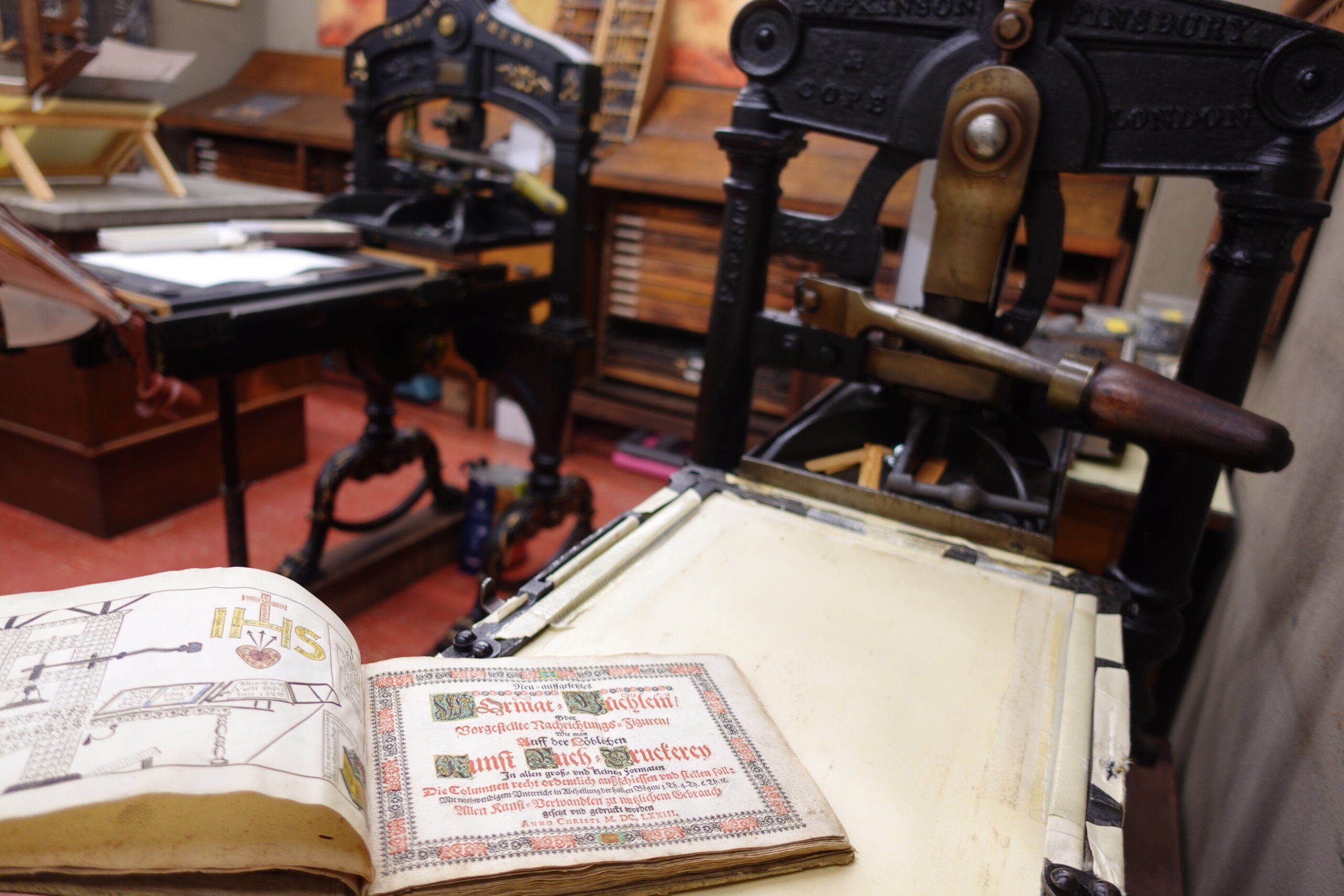
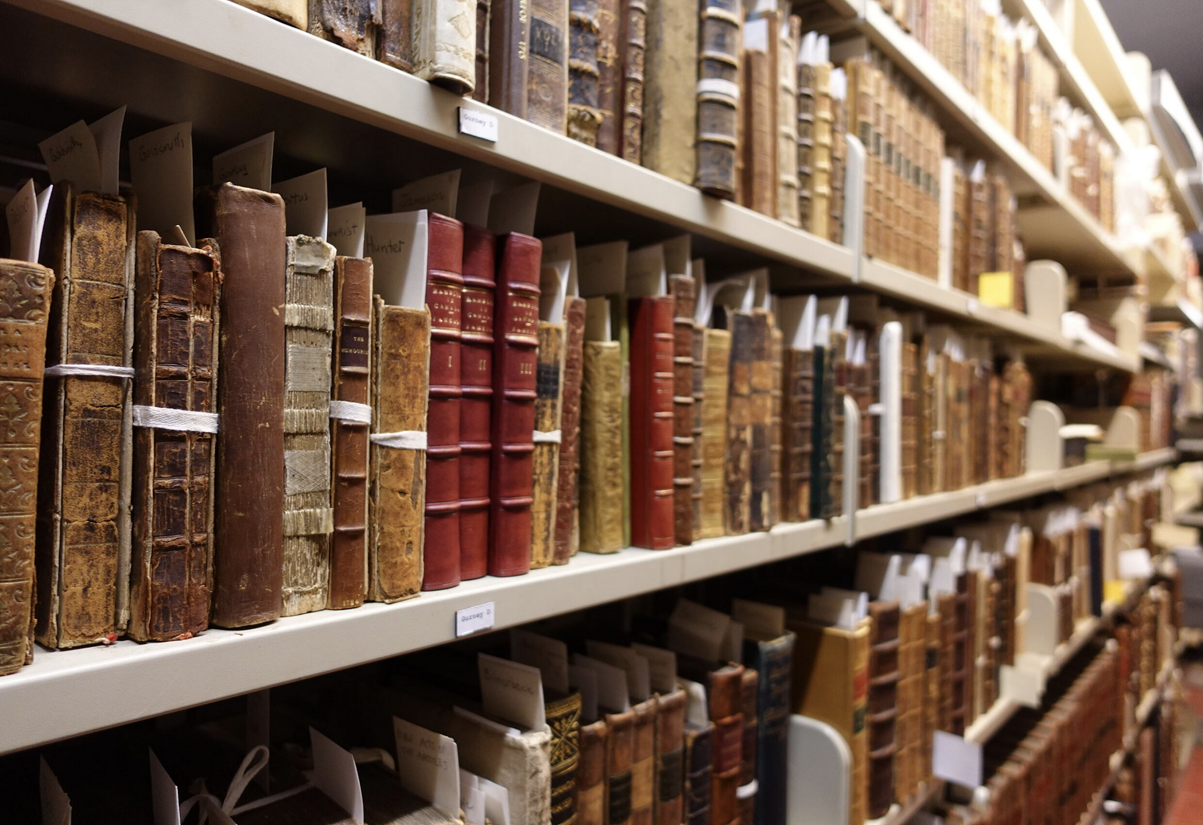
For more on this collection, see here or see the Visual Guide to the Balinson Hebrew Type Collection created and researched by Leora Bromberg. Most of our printing artefacts are uncatalogued. There is also a Notion page dedicated to the Balinson type, as well as an interactive case lay. If you are interested in this collection, please contact the Librarian.
Ruari McLean
The largest rare book collection in the library is the Ruari McLean Collection, built mainly by British book designer and historian Ruari McLean (1917–2006). In 1991, it was expanded with a collection of 19th century publishers bindings gathered by Fianach Jardine.
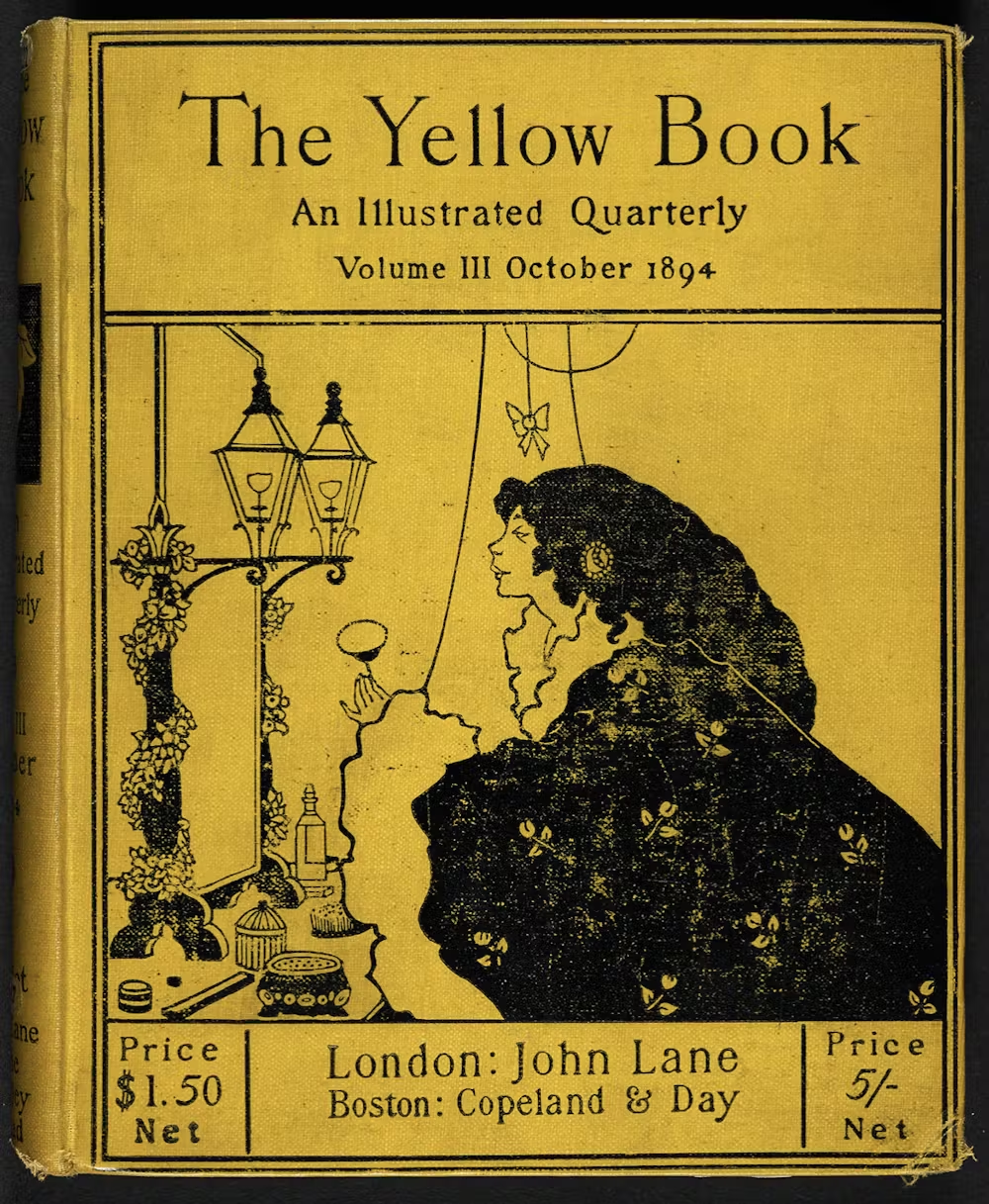
The collection showcases 19th century book production, focusing on colour printing and decorative bindings. It includes publishers bindings, yellowbacks, miniature books for children, and other printed works across many subjects. Many volumes feature ornate bindings in leather or cloth, often blocked in gold or colour, and include techniques such as papier-mâché.
It highlights various illustration methods including wood engraving, lithography, chromolithography, etching, aquatint, and early photomechanical processes.
Books are shelved by size, shown in the call number: McLean F for folios, FF for flat folios, Q for quartos, O for octavos, and D for duodecimos. To browse, search by call number in the U of T Library Catalogue and enter the beginning of the code (for example, McLean F).
Roy Gurney
The Roy Gurney Collection is the library’s second largest rare book collection. Assembled by Roy Gurney, Plant Superintendent at University of Toronto Press in the 1960s and a founding member of the Quadrats, it reflects early printing and binding practices. Gurney worked closely with Founding Librarian Doug Lochhead and figures such as Carl Dair, Alan Fleming, and Will Rueter to help build Massey College’s early printing collections, donating both books and equipment, including the College’s Washington Press, still in use today.
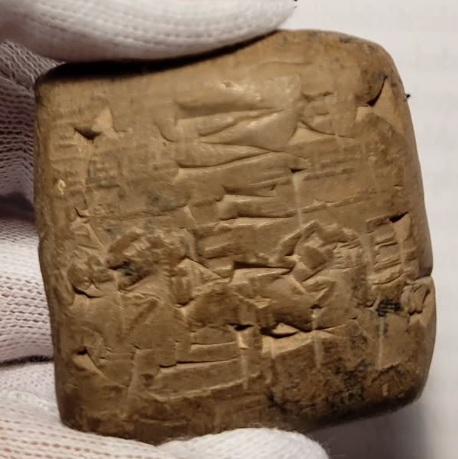
The collection features books mainly from the 16th and 17th centuries, with some 19th century works, plus rare items like the Otto Ege Leaves and a cuneiform tablet. It includes Italian, German, Swiss, French, English, Scottish, and Dutch imprints, with printers such as Aldus Manutius, Christophe Plantin, and the House of Elzevir.
Only parts of the collection are catalogued. It is arranged by size, with call numbers beginning with “Gurney.” To browse, search by call number in the U of T Library Catalogue (e.g. “Gurney Q”). Contact the Librarian for access.
Private Presses
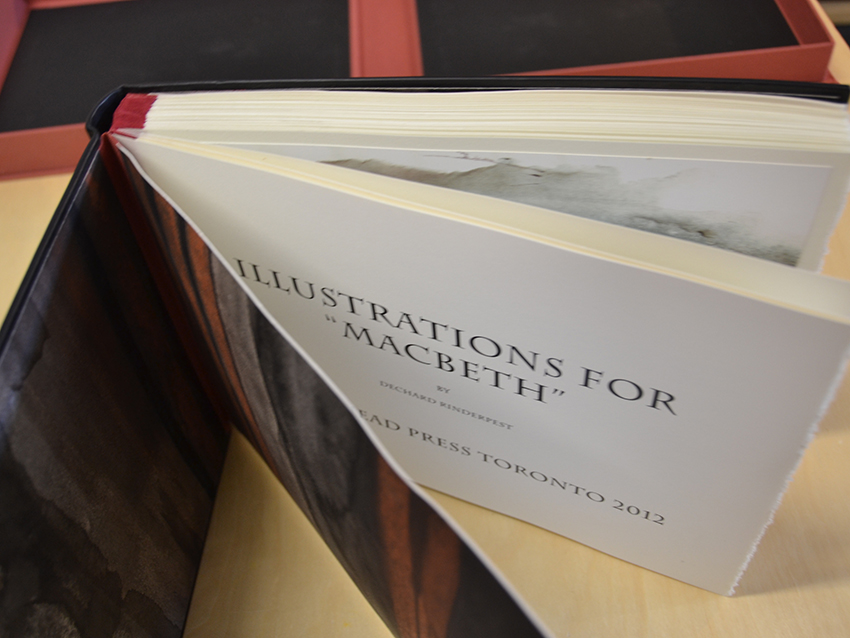
The Presses Collection highlights books and printed works created by private presses that focus on the art and craft of printing rather than commercial profit. As John Carter (1961) put it, private press printers “print what they like, how they like,” valuing quality and creativity over mass production.
The collection includes books, pamphlets, and ephemera from private presses in Canada, the US, and Europe from the 1890s to today. Notable presses include Kelmscott, Gregynog, Golden Cockerel, Stanbrook Abbey, Officina Bodoni, Merrymount, Rampant Lions, Bird & Bull, Lumiere, Aliquando, and more. It also holds a small uncatalogued group of artists books.
Catalogued items use the prefix “Presses.” To browse, search by call number in the U of T Library Catalogue using “Presses.”
Medieval MS and Incunabula
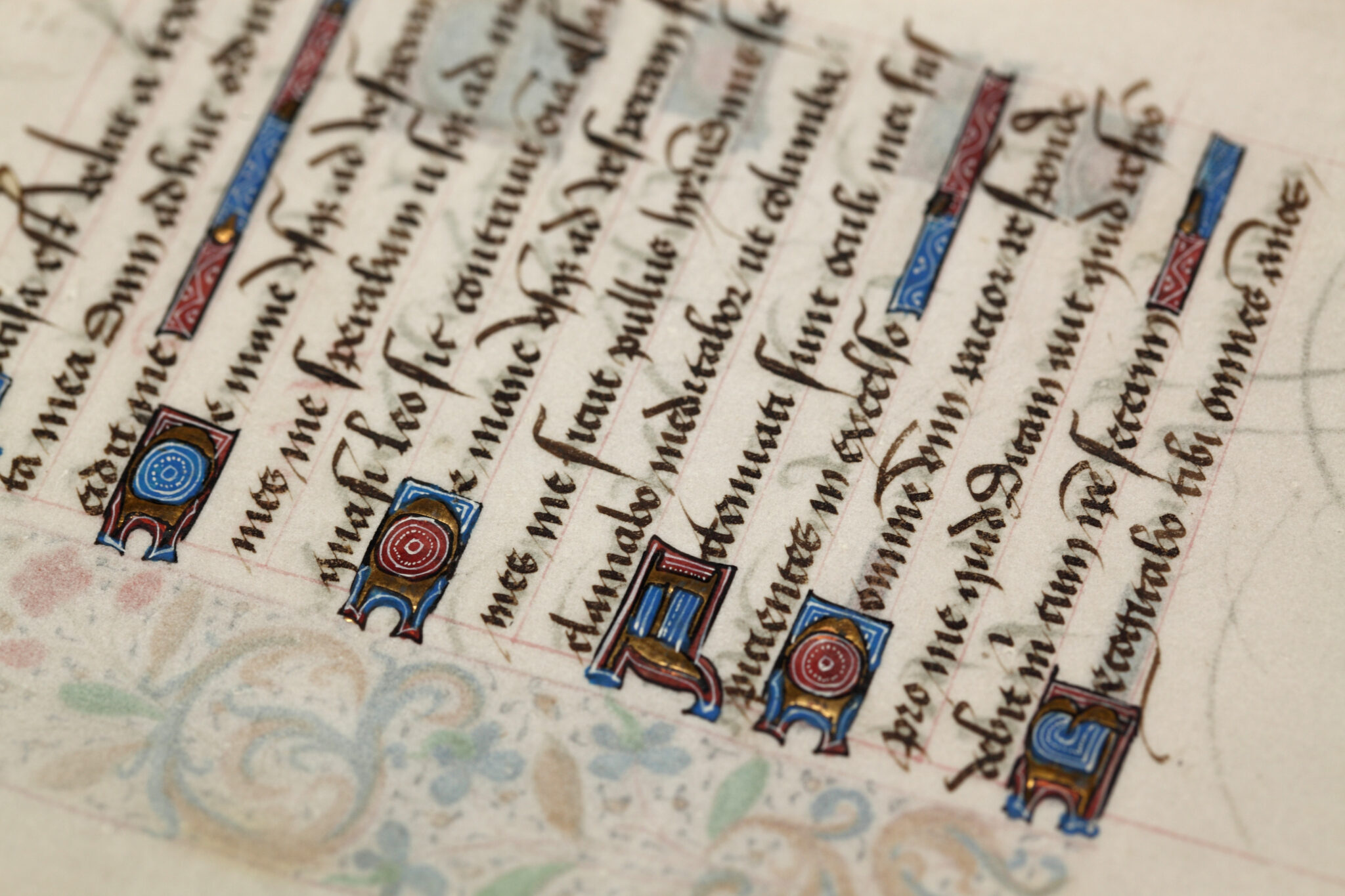
The library holds one of forty portfolios of medieval manuscript leaves compiled by art historian, and biblioclast Otto Ege in the 1940s. Each portfolio includes one leaf from fifty manuscripts, mostly religious texts like missals, prayer books, and psalters. Ege created them for art education and to inspire book design.
In addition we have received other Medieval manuscript fragments from Roy Gurney, and William Rueter. These fragments have been digitized and uploaded to Fragmentarium based in Switzerland. A recent study has found that one of our manuscript fragments is a letter written by King Louis XI of France.
Our library also holds a large collection of incunable leaves (1450-1501) obtained from Carl Dair, Roy Gurney, and William Rueter.
Balinson Type Collection
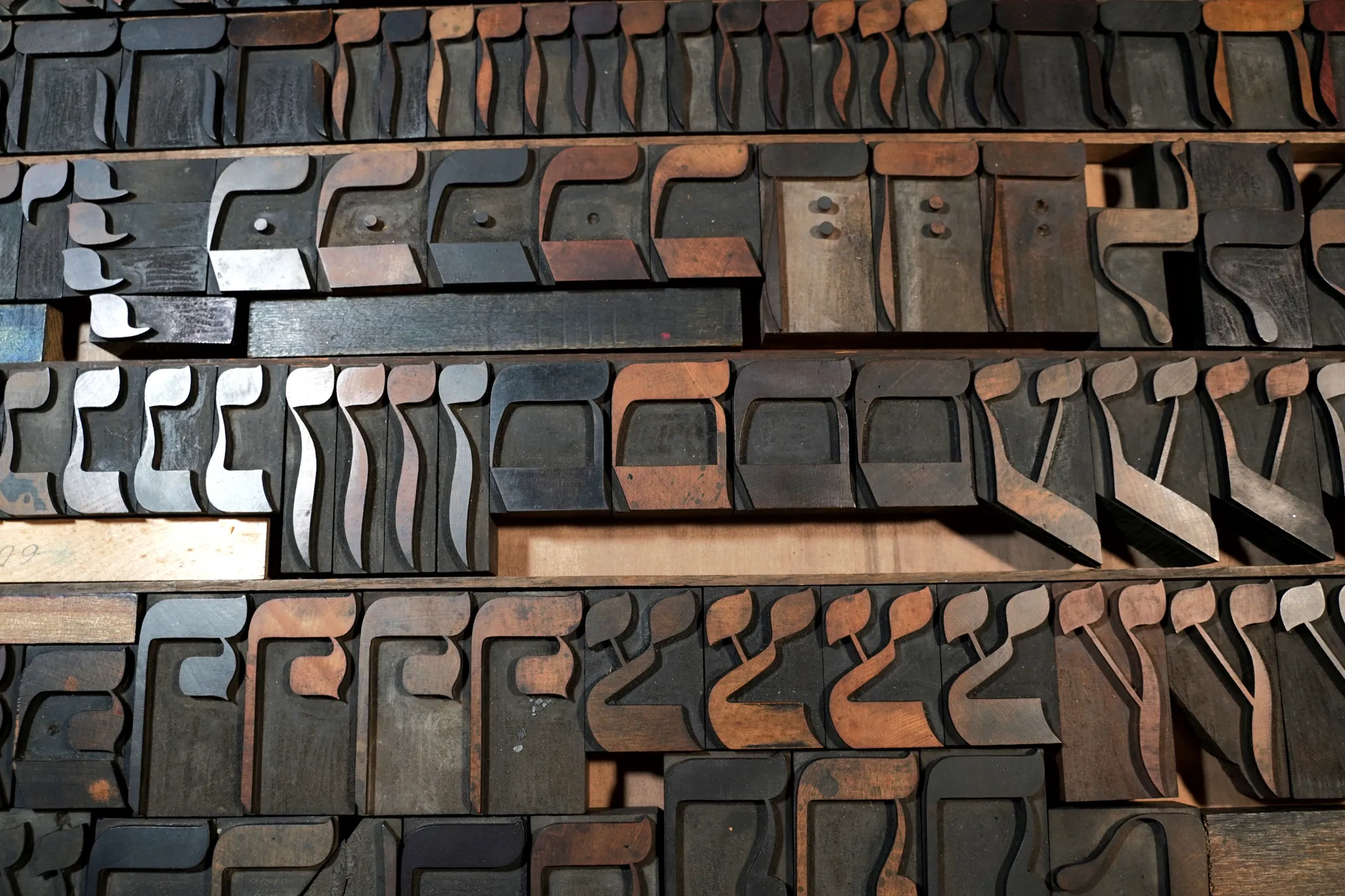
The Balinson Collection includes 9 fonts of Hebrew metal and wood type. Acquired in 2013 from Joan and Morley Balinson. The type was used by Henry Balinson, founder of International Press Printers and the Yiddish newspaper Jewish Voice of Hamilton (1933–1943). Henry worked in 11 languages and was a key figure in the Hamilton community. Morley helped in the shop from childhood and ran the press until the late 1960s.
Private Archives: Carl Dair and Aliquando
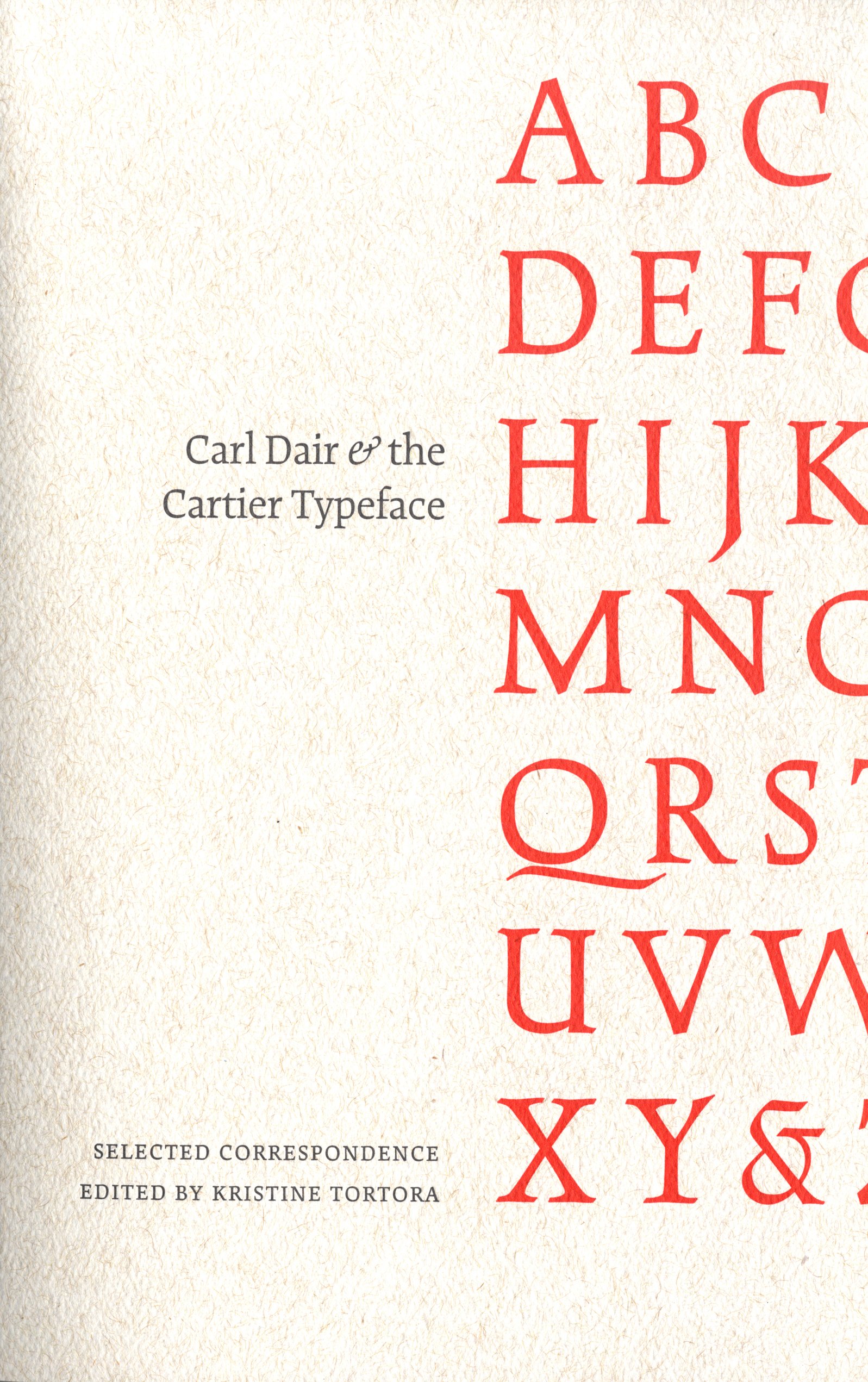
Carl Dair (1912–1967) was a leading Canadian graphic designer and typographer, best known for creating Cartier, the first Canadian-designed text typeface. Self-taught, he became Typographical Director at the National Film Board and later co-founded Everleigh-Dair studios. His 1946 book Design With Type became a key design text. In the 1950s, he studied type design in the Netherlands to create a national typeface for Canada. A founding member of the Typographic Designers of Canada, Dair influenced generations through his work and writing. He presented Cartier as a centennial gift to Canada in 1967, the year he died at age fifty-five.
The Library holds his papers, correspondence, design work, and reference library. Dair’s reference collection can be located within the U of T library catalogue by entering “Dair” in the search box, and searching within “call number”. A finding aid to the fonds can be found here: Carl Dair Fonds Finding Aid.
The library holds Carl Dair’s personal reference collection, including books on design and typography, type specimens, exhibition catalogs, and other materials gathered during his career. To find items, search “Dair” by call number in the U of T Library Catalogue.
The Aliquando Press, founded in 1962 by William Rueter, is one of Canada’s most respected private presses, known for its refined and creative book design, illustration, and printing. Rueter, a graphic designer at University of Toronto Press from 1969 to 1998, has published widely and received many honours, including the Alcuin Society’s lifetime achievement award in 2013.
The library holds Rueter’s correspondence, design work, proofs, and reference materials, along with a near-complete run of Aliquando Press publications. There was a recent exhibition held in his honour and many of his donated works have had their own exhibition such as the miniature books, or medieval manuscript fragments.
More details can be found here: Aliquando Finding Aid
Paleography Collection
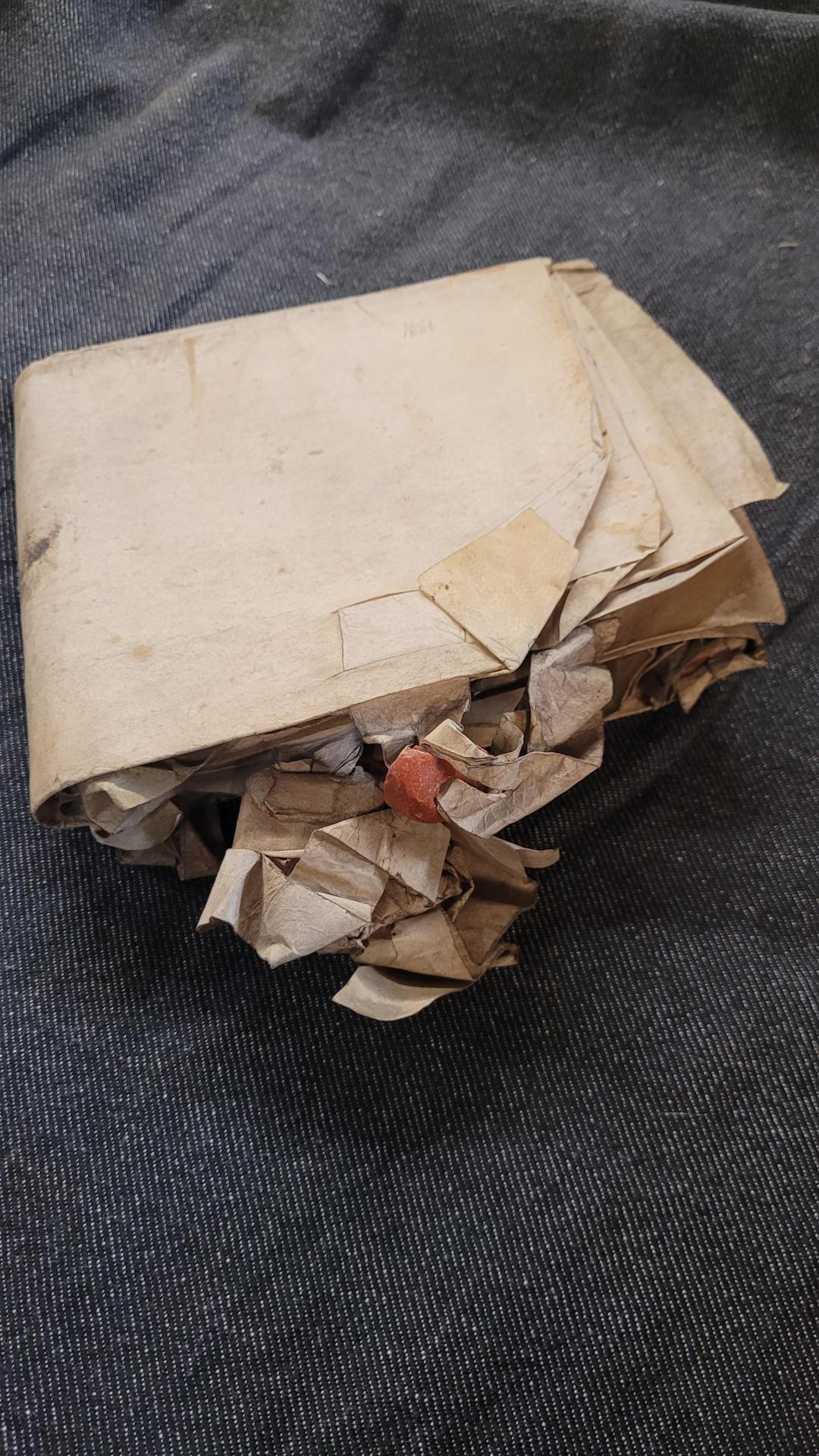
The Robertson Davies Library is home to an exceptional paleography collection featuring rare manuscripts from the sixteenth and seventeenth centuries. Comprising finely preserved indentures and legal documents written on parchment, this remarkable archive offers a tangible connection to the administrative, legal, and social history of the early modern period. Many of these pieces retain their original wax seals, still attached after centuries, adding both authenticity and visual splendour to the collection. Rich in historical significance and craftsmanship, these manuscripts provide scholars and visitors alike with a rare opportunity to engage directly with the written culture of a bygone age. Learn more about it here.
Christopher Patton has done a lot of research on Box 15. You can learn more about it here, and here.
Type Specimens
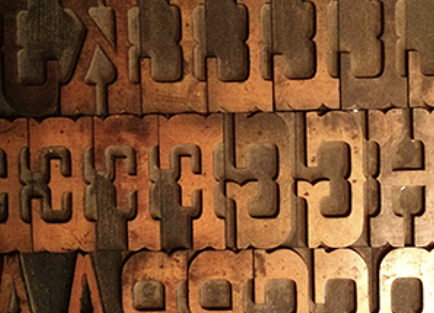
The Massey College Type Specimen Collection includes about 250 books and over 1,000 pamphlets and ads from the late 18th to late 20th century, covering metal, wood, and photo-typesetting. It features specimens from foundries like Caslon, Baskerville, Monotype, Linotype, and Hamilton Wood Type. Some items are catalogued under the prefix “Type Pam” and can be browsed in the U of T Library Catalogue. Books can also be found under the subject “Printing – Specimens.” Contact the Librarian for uncatalogued material.
In addition we have a large wood type collection gifted by Roy Gurney in 1974 with additional types donated by Mary Williamson in 199. Bold, ornate, and instantly recognizable, wood type was key to posters, ads, and announcements from the 1800s to 1900s. The Wood Type Collection holds 356 fonts from the 1850s to 1960s, made using methods like pantograph cutting, die-cutting, hand-cutting, and veneer. It is a rich resource for those studying wood type design, production, and use.
An index for the collection, which includes a growing number of printed type specimens, can be accessed here.
Bibliography
The Bibliography (BIB) collection is the largest in the library, covering book production and history from the 19th to 21st century. It includes scholarship on the history of books, libraries, illustration, binding, calligraphy, papermaking, collecting, bibliography, paleography, typography, and printing. It also contains technical manuals on letterpress, press mechanics, machinery, papermaking, binding, and illustration techniques like wood engraving, steel engraving, etching, aquatint, lithography, and chromolithography.
The Bibliography collection is catalogued with a call number beginning with “BIB” and can be browsed by call number in the U of T Library Catalogue by entering “BIB” with the addition of a letter A-Z to narrow down your search (for example “BIB A” or “BIB P”) or by entering the relevant subject or subjects in the advanced search, and limiting your search to “Massey College” under ‘Library’.